Keep a Two-Minute Daily Health Log
A daily health log is easy to start and easy to abandon. The trick is to separate two jobs: capture the signal while it is fresh, and add detail later when you can check it against a source. This guide shows a two-minute minimum you can keep on a busy day, and the rule that keeps later editing honest.
Verified against the current Genetiqo Vault product · Updated July 16, 2026- Minimum
- The date plus one short, observable line
- Later
- Detail is added from a source you can check
- Limit
- Added context is not a reconstruction of memory
- Storage
- Entries stay in the app on the iPhone until export
The principle: log the signal now, add detail when you can verify it
Most logs fail because the entry form asks for more than the moment allows. A two-minute minimum flips that: record the date and one observable fact now, then complete the record later from the lab report, the device reading or the note you already wrote.
Later editing is only trustworthy when each added field traces back to a source. Filling gaps from memory turns a record into a reconstruction, which is exactly what a health journal should avoid.
- Write the date and one observable fact before the day ends.
- Attach an existing treatment or routine so a short note keeps its context.
- Add detail later only from a source you can check.
- Leave a field blank when you cannot verify it.
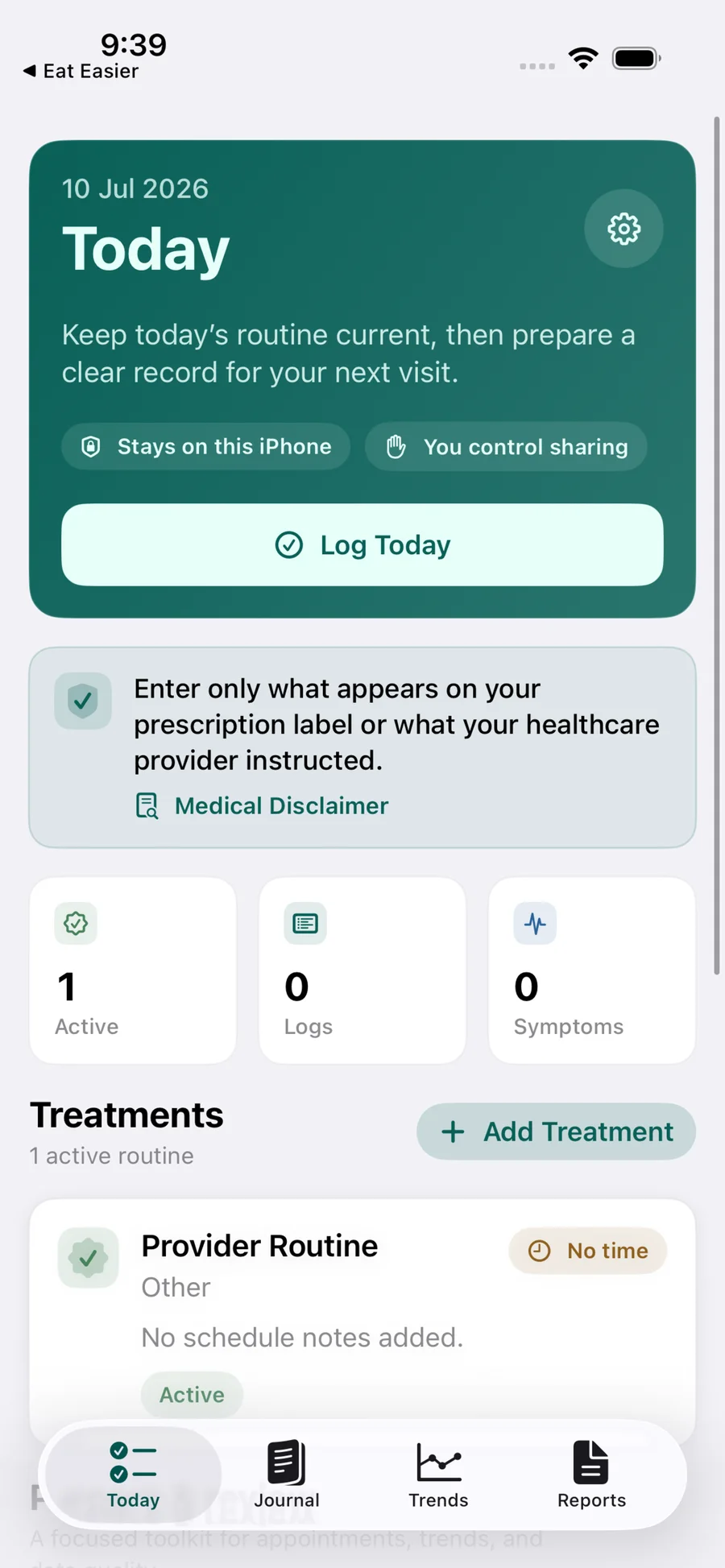
- 01
Set a two-minute minimum you will actually keep.
Choose a trigger you already have—after a routine, before bed, or with your morning dose—and decide that the minimum entry is one line. A habit with a tiny floor is easier to keep than one that demands a complete record every time.
- 02
Log the date and one observable fact before the day ends.
Write the date and one neutral, observable line, such as a routine marked completed or a symptom you noticed. Describe what you observed rather than what you think caused it, so the note stays a record instead of a conclusion.
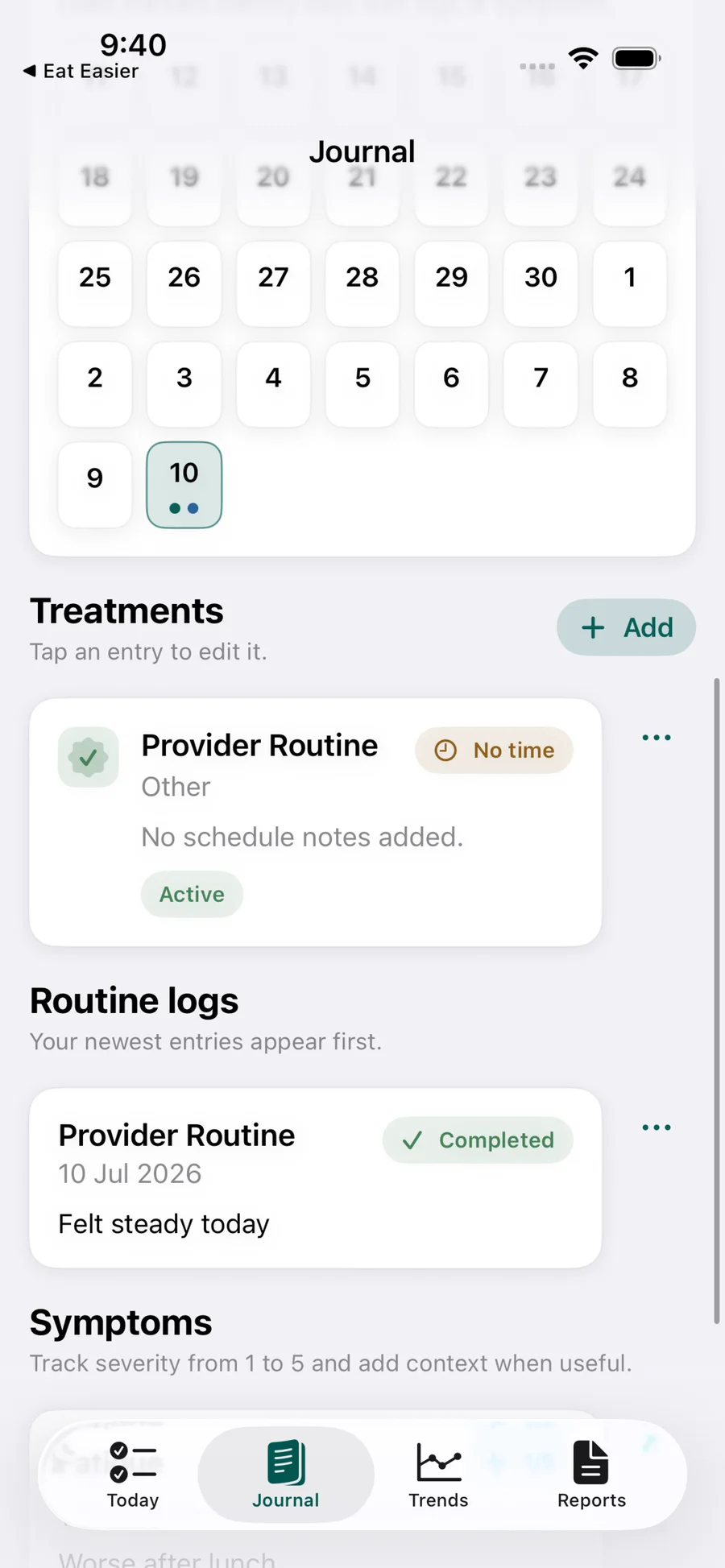
- 03
Link the entry to a treatment or routine for context.
If the note relates to an existing treatment or routine, link it. A linked entry keeps the treatment name and schedule beside the observation, so a short note still makes sense weeks later without extra typing.
- 04
Add detail later only from a source you can check.
When you return to a thin entry, add only what a source can confirm—the value on the device, the unit on the lab report, the wording on a prescription label. If you cannot check it, leave it out rather than filling the gap from memory.
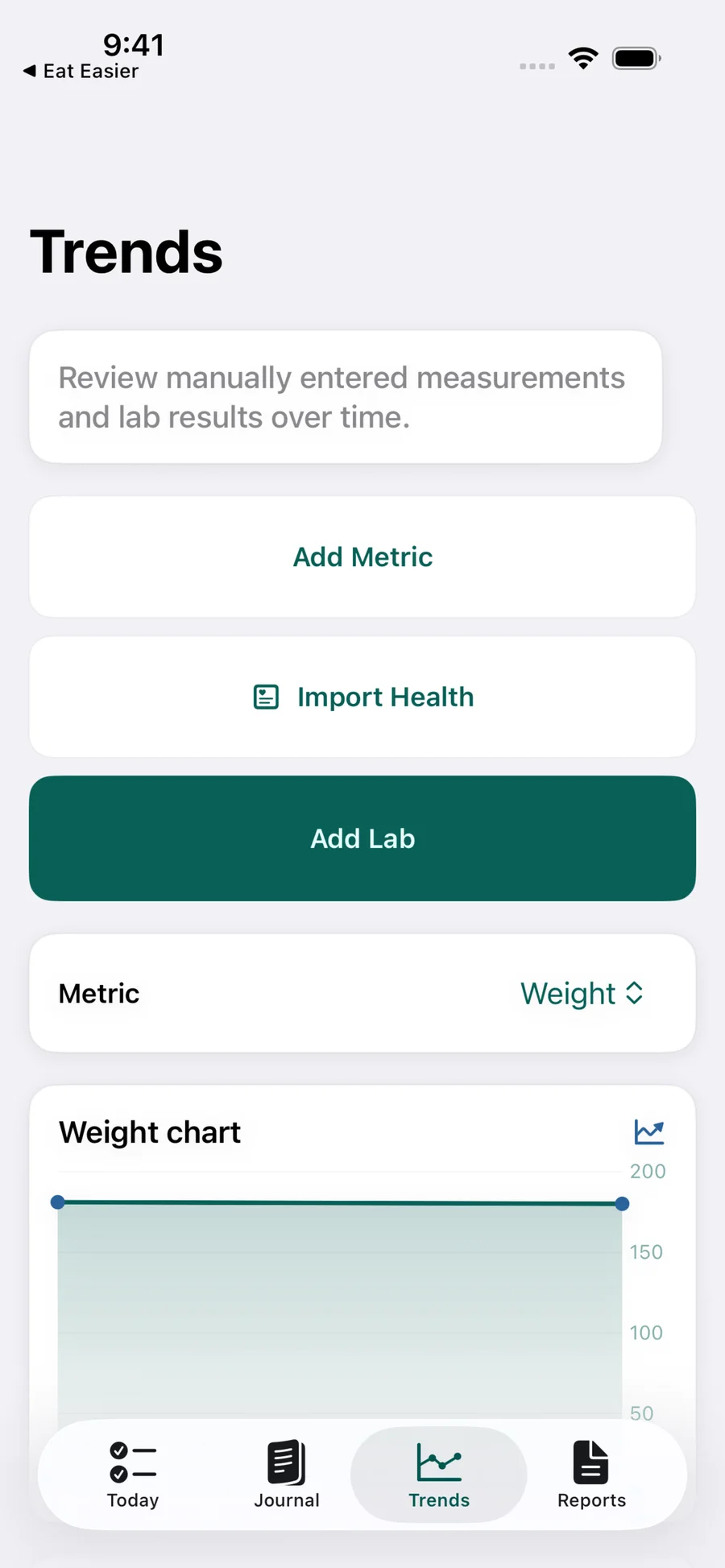
- 05
Review the entry and leave unknowns blank.
Read the finished entry as a reader would. Correct unclear wording, confirm the date, and leave unknown fields empty. A short, verifiable entry is more useful later than a long one built on guesswork.
A two-minute daily log works because it does not pretend to be complete on day one. Capture the date and one observable fact now, then add detail later only when a source confirms it—and leave the rest blank. The result is a record you can review and share without wondering which parts were reconstructed. Genetiqo Vault keeps these entries on the iPhone and does not fill gaps for you.