Unrecorded Day vs. Symptom-Free Day in a Health Journal
Scroll through a health journal and the quiet days look reassuring—but a blank date is not the same as a symptom-free day. It only means nothing was entered. This guide shows how to record the difference on purpose, and how to read a timeline or report without quietly turning missing data into a medical fact.
Verified against the current Genetiqo Vault product · Updated July 16, 2026- Blank day
- Usually means no entry was made
- Symptom-free
- Must be recorded to be a fact
- Review
- Timeline and calendar show what was entered
- Boundary
- The app cannot infer an absence
The principle: a blank day is missing data, not a negative finding
A journal is a record of what was entered, not a continuous monitor. When a date has no entry, the honest reading is unknown: you may have had no symptoms, or you may simply not have logged that day. Treating the two as the same is how a record starts to say more than it knows.
The fix is deliberate either way: record a quiet day as observed, or accept the gap as unknown. The app cannot make that distinction for you, and neither can a report generated from the same entries.
- A blank date means no entry, not no symptoms.
- To claim a quiet day, record it as observed.
- Read gaps as unknown, not as evidence of health.
- Keep the distinction when you export or share a report.
- 01
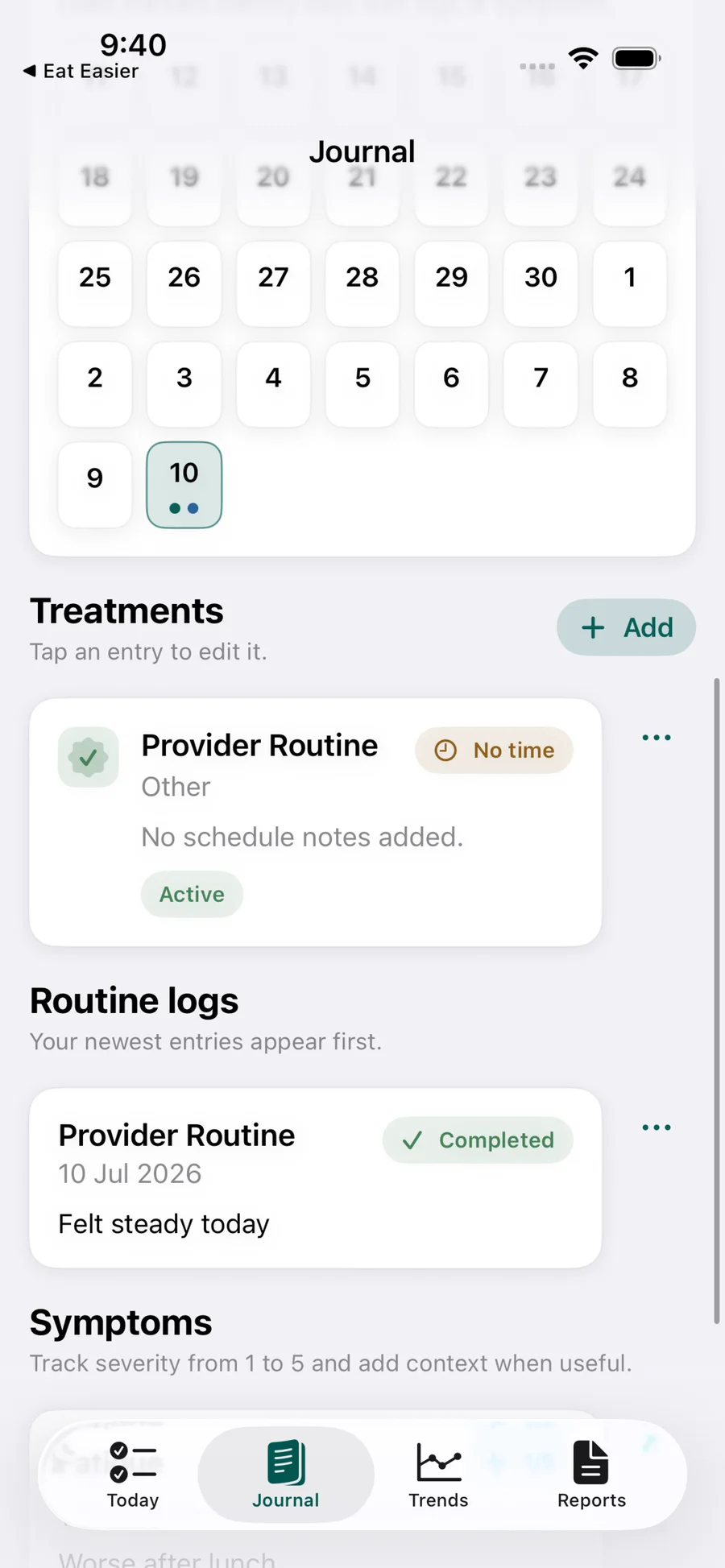
Notice which days have entries and which do not.
Open the timeline or calendar and scan for dates without activity. The goal is not to fill every gap—it is to know which days are recorded and which are simply unknown.
- 02
Record a quiet day on purpose when it matters.
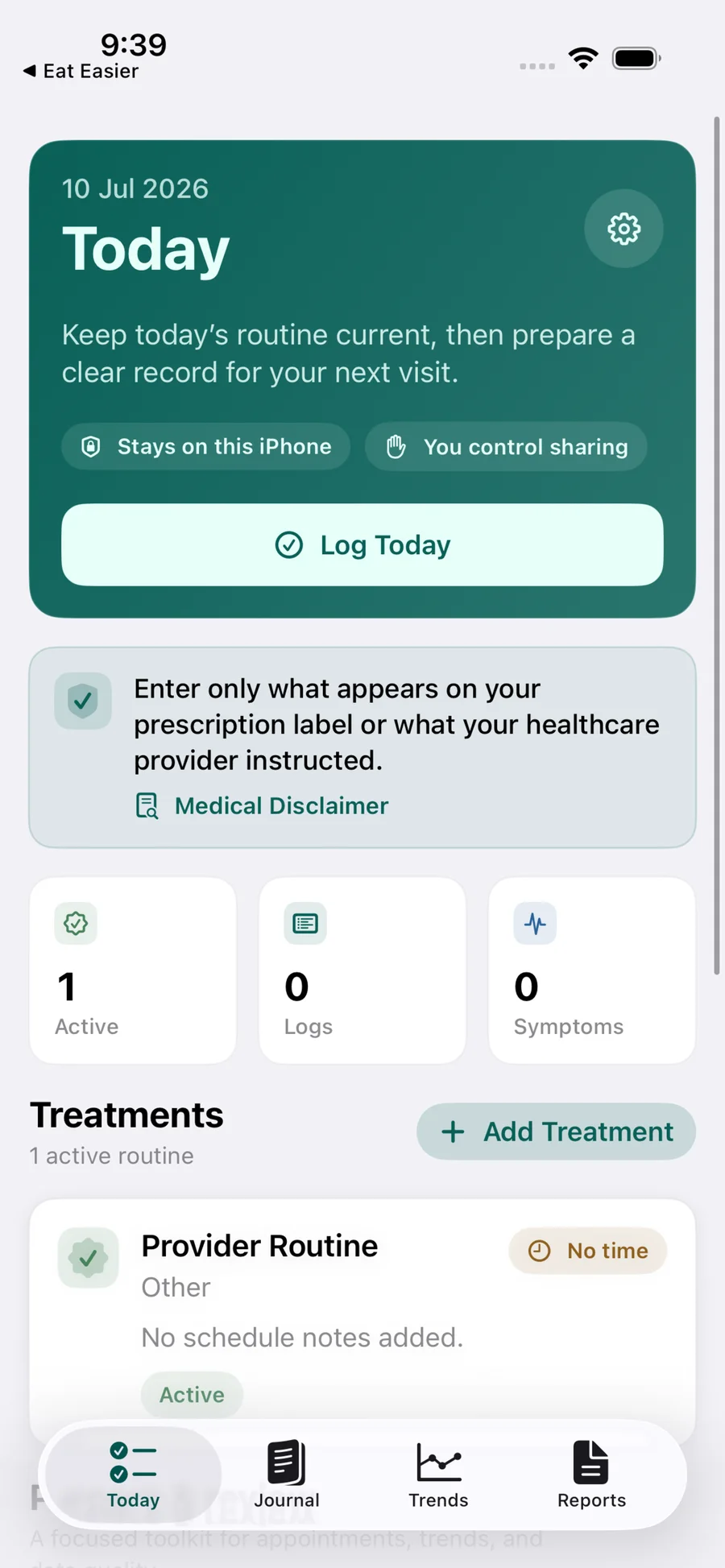
On a day you want to count, add a short dated note describing what you observed, even if the observation is that nothing unusual happened. A recorded quiet day is a fact; an unrecorded one is a hole.
- 03
Read blank dates as unknown, not as symptom-free.
When you review an earlier period, do not upgrade a gap into evidence of health. A missing entry during a bad week may mean you could not log, which is the opposite of a symptom-free conclusion.
- 04
Check the calendar and timeline for what was actually entered.
Use the calendar markers to locate dates with routine or symptom activity, then open the underlying entries in the timeline. A marker only points to a day that has entries; the detail lives in the record itself.
- 05
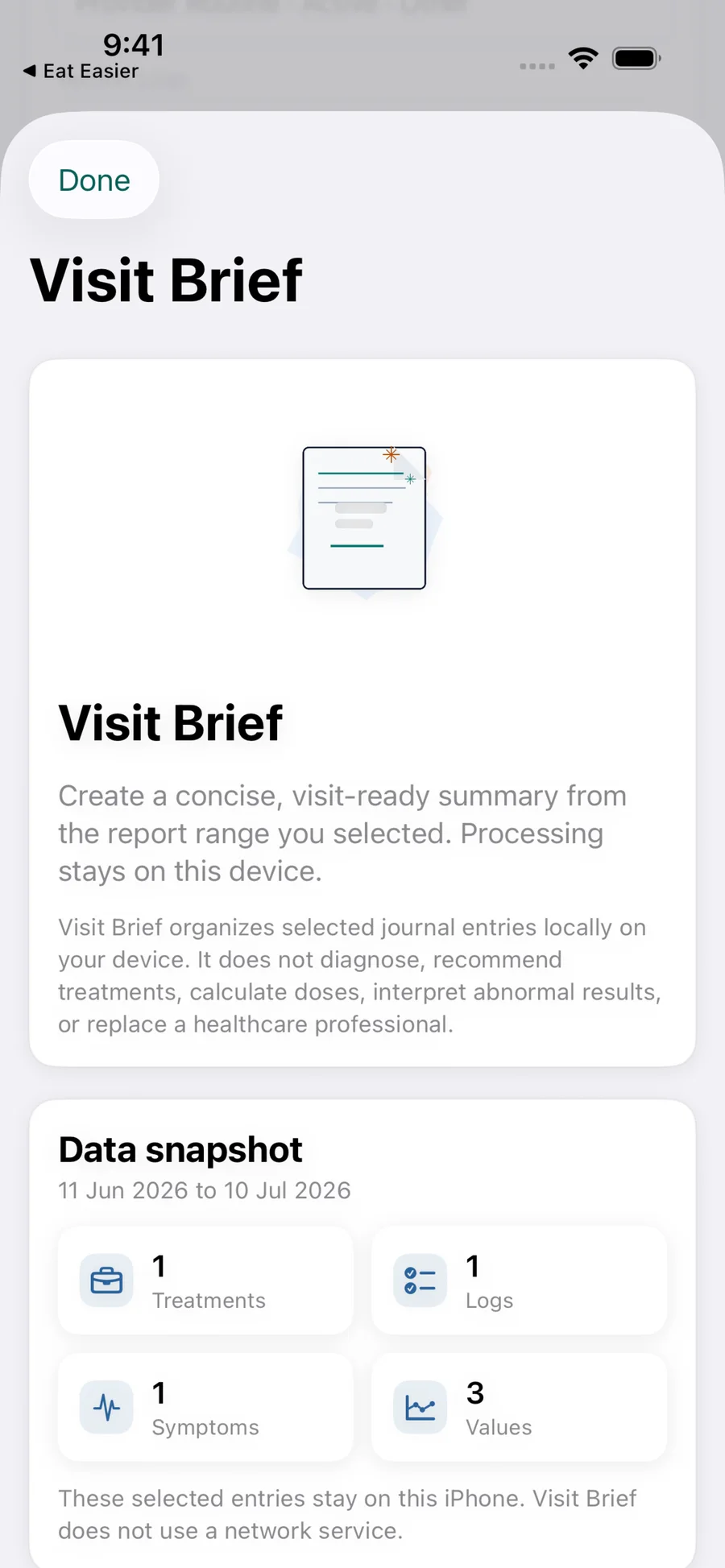
Keep the distinction in a report or export.
Before preparing a report, state plainly how you treated blank dates. If you left gaps as unknown, keep that reading when you discuss the summary, and avoid presenting a sparse record as a complete history.
A health journal should preserve the difference between "nothing was logged" and "nothing happened." Record a quiet day when you want it to count, read blank dates as unknown, and carry that same honesty into any summary you share. Genetiqo Vault shows the entries you made; it does not infer what the gaps mean.